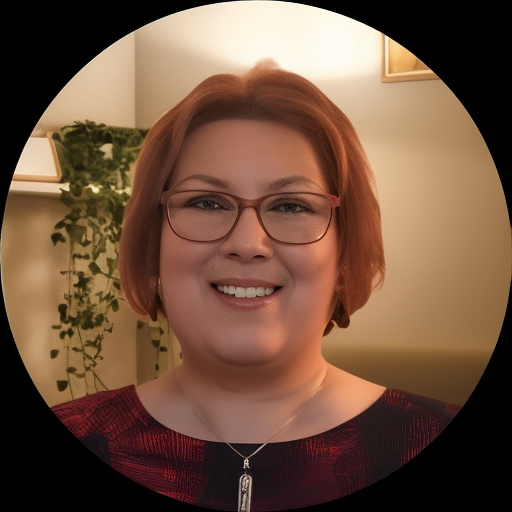
Part 1 of 4
- 30 years experience
- Speaks English Spanish
- Skills focused therapy
About &
She uses person-centered conversations to learn what matters most to each client. Sessions include teaching coping skills, emotion regulation strategies, and behavioral tools that help with daily routines. Cognitive behavioral methods are used to identify unhelpful thinking and try new responses.
For relationship concerns she uses techniques from the Gottman Method and Emotionally-Focused Therapy to help people improve how they connect and talk about difficult topics. Dialectical behavior therapy tools are offered when emotion regulation and distress tolerance are needed.
Her work includes support for people affected by developmental disabilities, behavioral disorders, chronic medical conditions, and trauma. She also addresses issues such as abandonment, adoption and foster care, caregiver strain, and body image in practical, skills-based sessions.
Dr. & Mrs. Sabater-Lenk teaches short-term strategies and longer-term habits. She aims to create a nonjudgmental space where clients feel listened to and can try new ways of coping. People who want straightforward tools and warm guidance may find her style a good fit.
Part 2 of 4
Approaches that fit online work
Client-Centered Therapy focuses on listening and supporting each person's goals. Online sessions using this approach let the therapist reflect concerns, prioritize what matters most, and help people set realistic steps for daily life.Cognitive Behavioral Therapy (CBT) teaches practical ways to change thoughts and behaviors that keep problems going. In online sessions CBT commonly uses short exercises, thought records, and homework to practice new skills between meetings, which helps with anxiety, depression, and stress.
Dialectical Behavior Therapy (DBT) offers concrete tools for emotion regulation, distress tolerance, and clear communication. Delivered remotely, DBT skills can be taught in brief demonstrations and practiced with real-life examples brought into sessions.
Choosing the right approach is part of the process. The therapist will work collaboratively to match methods to a person's needs, goals, and preferences and may combine techniques as treatment progresses.
The biography does not list specific session formats, so confirm current options before booking. Many people find online work helps fit therapy into busy schedules, reduces travel time, and makes it easier to attend brief check-ins or longer skills sessions. Talk with the therapist during the matching process about which meeting style will best support daily routines and treatment goals.
Part 3 of 4
Areas of expertise
Primary focus
Also works with
Additional focus areas
Therapeutic approaches
Experience
30+ years
Credentials
New York, Florida
Languages
English, Spanish
Part 4 of 4
Frequently asked questions
What concerns does she address?
She helps people with stress, anxiety, depression, anger, relationship issues, trauma and abuse, and low self-esteem. Additional focus areas include abandonment, adoption and foster care, aging concerns, autism spectrum issues, chronic illness, and caregiver stress.
What is the general therapy style?
The work is person-centered and skills focused, combining evidence-based tools with practical coaching. Sessions often include emotion regulation, coping skills, and behavior-focused exercises.
How much experience does the therapist have?
She has thirty years of clinical experience working with diverse concerns, from mood and personality challenges to developmental and medical-related issues.
What credentials and region are listed?
She holds the credential LCSW and practices in Florida. The biography lists licensure as NY LCSW and FL LCSW.
In which languages are sessions offered?
Sessions are offered in English and Spanish.
Can I do sessions online or by phone?
Please confirm current session options before booking, as the biography does not specify formats. The site matching process will help clarify available ways to meet.
How are fees and billing handled?
Cost varies with location and therapist availability; sessions use a subscription that can be canceled at any time.
What are the first steps to begin therapy?
Select the Start Therapy button, complete a short matching questionnaire, and schedule according to therapist availability.